Wildfire risk is part of mountain living in Vail and Eagle County. If you are planning to sell or renovate, buyers and insurers will look closely at how your property handles embers, heat, and vegetation. The good news is that a few targeted upgrades and a clear defensible space plan can make a real difference. In this guide, you will learn how WUI rules may affect your project, what materials matter for roofs and decks, and a practical step-by-step plan you can start today. Let’s dive in.
Wildfire risk in Vail and Eagle
Vail and Eagle County sit in a high-risk wildfire region with mountain forests, steep slopes, and seasonal droughts. In these conditions, homes most often ignite from wind-driven embers and radiant heat. That is why the home’s exterior details and the first 100 feet around it matter so much.
Local planning often references Community Wildfire Protection Plans and county hazard mitigation efforts. Before you start work, check the Town of Vail’s planning and fire department pages, Eagle County’s building and wildfire mitigation pages, and your local fire protection district for current guidance. You can also look for WUI and hazard maps from the Colorado State Forest Service and federal agencies to understand how your parcel is categorized.
WUI and defensible space basics
The Wildland-Urban Interface, or WUI, is where homes meet or intermingle with wildland vegetation. In these locations, best practice focuses on defensible space and ignition-resistant construction. Most guidance uses three zones that radiate from your structures.
Immediate zone: 0 to 5 feet
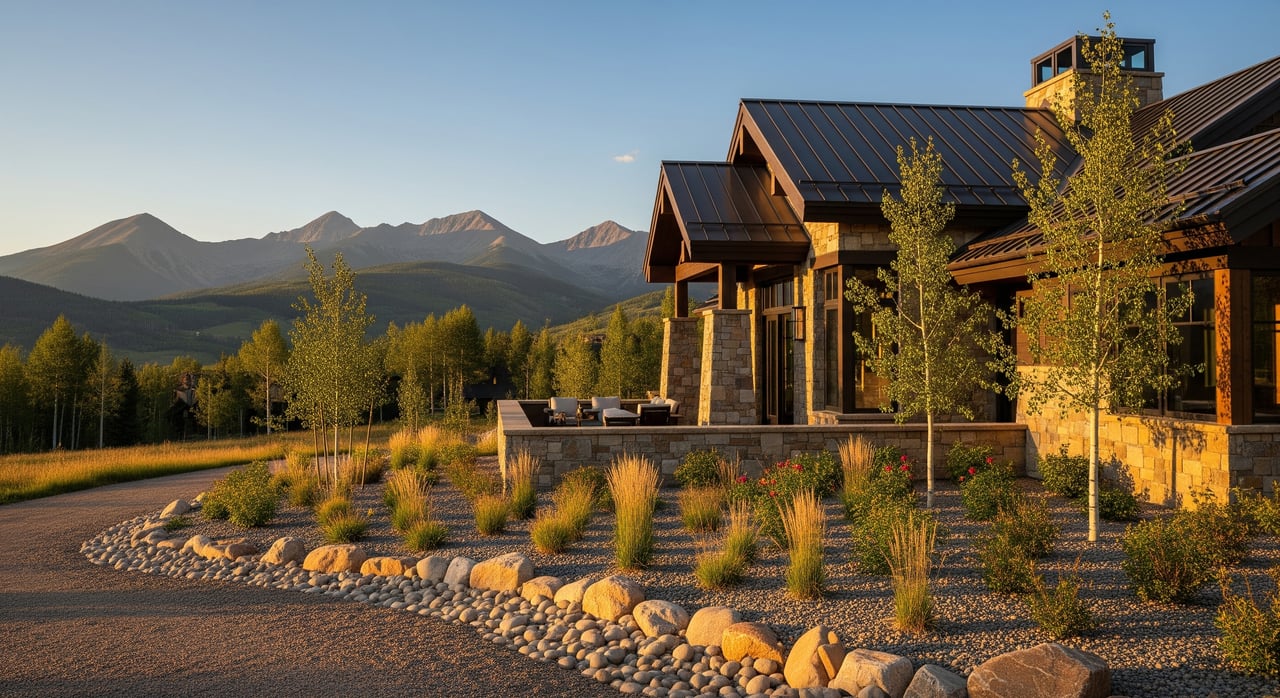
Treat this area as a noncombustible buffer. Keep flammable shrubs, stacked firewood, and dry debris out of this strip. Use hardscape, stone, or other noncombustible ground cover, and avoid bark or wood-chip mulch against the foundation. Keep roofs, eaves, and gutters clear of leaves and needles.
Intermediate zone: 5 to 30 feet
Break up continuous fuels so fire cannot easily move to the home. Remove ladder fuels by trimming lower tree branches and clearing brush under canopies. Keep plants well spaced and maintain low, well-irrigated beds near the house. Maintain noncombustible separations around decks and exterior walls.
Extended zone: 30 to 100 feet
Thin dense stands, remove dead shrubs, and create crown separation so fire intensity drops before it reaches the home. On steeper slopes, increase the intensity or distance of treatments because fire moves faster uphill. Where parcels are smaller, treat to the property line and coordinate with neighbors when possible.
Roofing, vents, and decks that perform
Your roof, vents, and deck are common ember targets. Upgrading these components and keeping them clean lowers ignition risk and can help with buyer and insurer confidence.
Class A roofing
Roofs are a primary exposure. If you are replacing a roof, choose a Class A fire-rated covering such as composition shingles with recognized fire resistance, metal, tile, or slate. Avoid untreated wood shakes in WUI areas. Keep roof valleys, eaves, and gutters clear, and use metal flashing and gutter guards where feasible.
Ember-resistant vents and eaves
Attic and foundation vents can admit embers. Install ember-resistant vents and use corrosion-resistant metal mesh, commonly 1/8 inch, to reduce ember entry. Enclose soffits and eaves with ignition-resistant materials. Clean vents and eave areas as part of regular maintenance.
Decking and the deck underside
Open wood decks can trap embers and ignite. Consider ignition-resistant or noncombustible decking, and enclose the underside with noncombustible soffit materials and supported metal mesh. Use metal flashing where the deck meets the house. Keep furniture, planters, and mulch away from deck edges and exterior walls.
Siding, gutters, and chimneys
Ignition-resistant siding such as fiber cement, stucco, or masonry performs better than combustible cladding. Keep gutters free of debris and use metal gutter covers where possible. Fit chimneys with screened spark arrestors and inspect them regularly.
What local rules may require
Colorado communities often use best-practice defensible space guidance and may adopt parts of the International Wildland-Urban Interface Code or NFPA 1144. In some areas, you will find mandatory fuel treatments or specific material standards in identified hazard zones. Roofing and deck replacements usually require permits, and larger vegetation work may require permits in conservation or riparian areas.
Because rules vary, verify the current requirements with the Town of Vail for properties within town limits, Eagle County for unincorporated areas, and your serving fire protection district. Ask about defensible space expectations, permit triggers when changing roof or deck materials, and any inspection or compliance letter options for sellers.
A five-phase plan for sellers and renovators
Use this simple timeline to organize your efforts and your documentation. It helps you prioritize the highest-impact items first.
Phase 1: Assessment (weeks 0 to 2)
- Request a wildfire risk assessment from your local fire department, a Colorado State Forest Service district forester, or a certified mitigation professional.
- Contact the Town of Vail or Eagle County building department and your fire district to confirm active requirements and permit needs.
- Speak with your homeowner’s insurance agent about what upgrades reduce premiums or affect insurability, such as Class A roofs, ember-resistant vents, or documented defensible space.
Phase 2: Immediate actions (weeks 1 to 6)
- Clear roofs, gutters, decks, and the 0 to 5 foot zone of leaves, needles, and combustible items.
- Move stacked firewood and building materials away from structures.
- Trim low branches and remove ladder fuels near the home.
- Take before and after photos and keep receipts for your records.
Phase 3: Structural upgrades (1 to 3 months)
- Replace high-risk roof coverings with Class A materials if needed.
- Retrofit vents with ember-resistant models and screen gutters with metal guards.
- Enclose deck undersides and consider ignition-resistant decking; add metal flashing at wall intersections.
- Install spark arrestors on chimneys and enclose soffits and eaves with ignition-resistant materials.
- Pull required permits and file all contractor invoices and inspection reports.
Phase 4: Landscape treatments (1 to 6 months)
- Implement defensible space in the 5 to 100 foot zones by thinning, pruning, and removing dead or highly flammable shrubs.
- Maintain crown separation and create access routes for emergency responders where possible.
- Use less-flammable, well-irrigated plantings near the home and avoid continuous shrub beds that form a fuel layer.
Phase 5: Maintain and document (ongoing)
- Schedule annual cleanups, especially before fire season.
- Keep a mitigation file that includes assessments, photos, permits, product specs for Class A roofing and vents, and any fire department compliance letters.
- Update your insurer and share documentation with your listing package when you go to market.
Permits, inspections, and disclosures
Roof and deck replacements or enclosures typically need building permits. Vegetation removal can also require permits in certain conservation areas. Confirm details with the Town of Vail or Eagle County before work begins.
Colorado sellers complete property disclosures. It is prudent to disclose known wildfire hazards, the mitigation work you completed, and any outstanding conditions that a buyer should plan for. If available, consider a defensible space inspection or letter from the local fire authority before you list. Many buyers and insurers view that as a positive signal.
Insurance conversations that help
Insurers often evaluate roof class, vegetation proximity, ember-resistant features, and whether the parcel sits in a designated hazard area. Some carriers offer credits for documented mitigation or require upgrades such as replacing wood-shake roofs to renew coverage.
Ask your agent which improvements matter most to their underwriting team. Request a pre-renewal checklist so you can prioritize work that moves the needle. If a large upgrade is required, ask whether a phased plan with deadlines is acceptable to keep coverage in place.
How mitigation supports your sale
In a high-risk region, buyers and insurers look for signs of proactive ownership. Clean roofs and gutters, visible defensible space, Class A roofing, ember-resistant vents, and enclosed eaves all communicate care. This can reduce friction during inspections and insurance approvals and help your home stand out among competing listings.
Documented work also helps you answer buyer questions with confidence. When you can provide product specs, permits, and photos, you shorten due diligence and help both sides feel at ease with the property’s wildfire posture.
Next steps for Vail and Eagle owners
- Book a site assessment with your local fire department or a CSFS district forester.
- Build your Phase 2 checklist for quick wins in the 0 to 5 foot zone.
- Plan roof, vent, or deck upgrades if you are renovating in the next 12 months.
- Organize a mitigation file for buyers and your insurer.
If you want help prioritizing improvements before you list, reach out for a personalized plan and market guidance tailored to Vail and Eagle County. Connect with Unknown Company to Schedule Your Luxury Consultation.
FAQs
What is the WUI in Vail and Eagle County?
- The Wildland-Urban Interface is where homes meet wildland vegetation, and it carries higher wildfire exposure driven by embers and radiant heat.
How should I set up defensible space around my home?
- Use three zones: 0 to 5 feet noncombustible, 5 to 30 feet with reduced ladder fuels and spacing, and 30 to 100 feet with thinning and crown separation.
Which roof materials are recommended in high-risk areas?
- Class A roofing is widely recommended, including composition shingles with recognized fire resistance, metal, tile, or slate; avoid untreated wood shakes.
What deck upgrades lower ignition risk?
- Consider ignition-resistant or noncombustible decking, enclose the underside with noncombustible materials and metal mesh, and add metal flashing at the wall.
Do I need permits for roof or deck work in Eagle County?
- Roofing and deck replacements or enclosures usually need building permits; always confirm with the Town of Vail or Eagle County before starting.
How far out should I treat on a steep slope?
- Many guidelines call for increasing defensible space distances or intensity on upslope exposures because fire spreads faster uphill.
What documentation should I keep for buyers and insurers?
- Keep assessments, photos, permits, contractor invoices, product specs for Class A roofing and ember-resistant vents, and any fire department compliance letters.